How much does an e-learning website cost in Singapore?
Fair Price Web Design builds custom e-learning and course websites from S$1,500 one-off,
with the first year of hosting free and S$300 a year afterwards. That is about S$2,100
over three years. Subscription course platforms cost roughly S$3,600 to S$7,200 over the
same three years and the fee never stops.
What is a cheaper alternative to Kajabi, Teachable or Thinkific?
Owning the site instead of renting it. A custom-built course website costs a one-time
build fee plus flat annual hosting, with no monthly subscription and no percentage of
sales. It becomes cheaper than Kajabi at around month 8 and cheaper than Thinkific's Start
plan at around month 16, and the gap widens after that.
Do I own my student list on a custom platform?
Yes. Student names, emails, purchase history and lesson progress live in your own database
on your own hosting. Nothing is held by a third-party platform, and the site can be moved
to another developer or another host at any time.
When should I use a course platform instead?
When the course is unproven and you have no audience yet. Paying a monthly fee to find out
whether anyone will buy is the correct risk to take. A custom build makes sense once you
have paying students and the subscription has started to feel like rent.
What about video hosting on a custom course site?
Course platforms bundle video hosting into their monthly fee, so a custom site needs its
own arrangement. Unlisted YouTube or Vimeo embeds cost nothing, Vimeo Pro costs roughly
S$30–S$60 a month for domain-locked privacy, and Cloudflare Stream charges per minute
stored and delivered. Even with paid video hosting the three-year total stays well below
every major course platform.
Can students pay by PayNow?
Yes. PayNow is set up alongside card payments, Apple Pay and Google Pay through Stripe.
Both one-off course purchases and recurring memberships are supported.
Can each family share one login for several children?
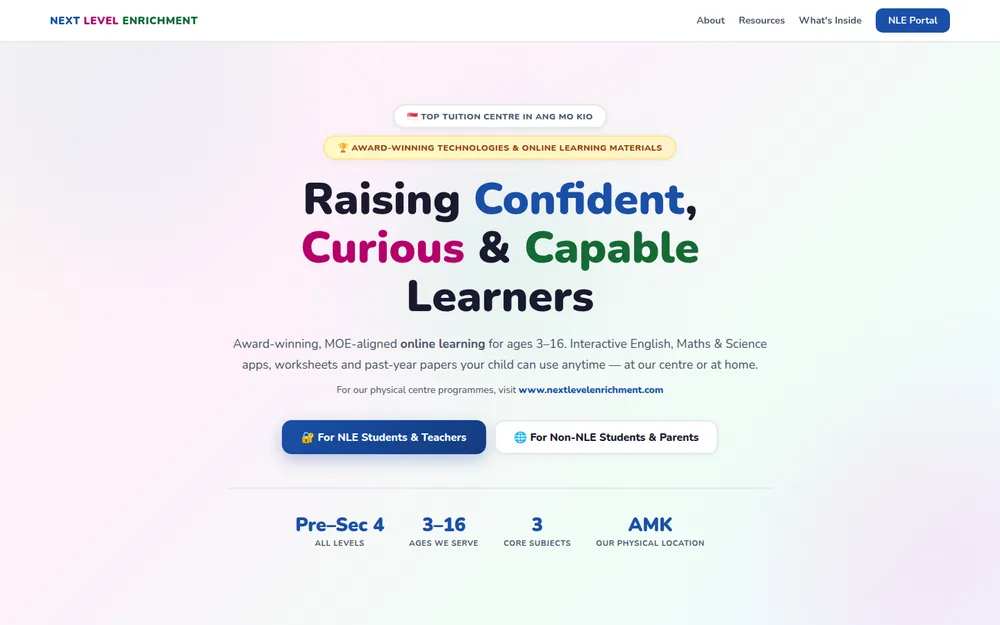
Yes. Per-family access is a standard part of these builds — one account, several children,
each seeing only the levels the family has paid for. It is one of the things off-the-shelf
course platforms handle badly and a tuition centre needs immediately.
How long does an e-learning website take to build?
Two to three weeks from the deposit clearing and the course content being ready, because
payments and access rules are tested with real transactions before launch.